Green Bathroom Tips: How to Reduce Your Impact and Save Money by Being Eco-Friendly in Your Loo!
Contents
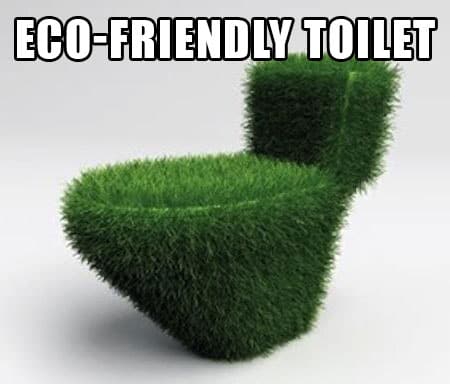 As conscientious, ethical consumers, we’re all trying to do our part to lessen our impact on the environment. There are lots of ways you can do that in the bathroom! You’ll benefit in more than the moral department, too! Being greener in the bathroom can save you money and help make your home healthier to live in.
Here are our top tips for greening up your bathroom!
Install low-flow fixtures
Probably the biggest impact your bathroom has on the environment is water usage. Whether you’re showering, brushing your teeth, or washing your hands, you’re using up fresh, clean water, something that’s in short supply in many parts of the world.
That’s why you should make a point to install water-saving fixtures in your bathroom. According to the EPA, swapping old, inefficient toilets for WaterSense labeled toilets can cut toilet water use by 20 to 60 percent. Even if you’re coming from a relatively recent shower head, a WaterSense model uses no more than 2.0 gallons per minute, at least 20 percent less than the standard 2.5.
You can find low-flow toilets, faucets, and eco-friendly shower head. To help you find them, the EPA has a program called WaterSense. Manufacturers who make water-efficient products apply to have them tested and certified. When you see a WaterSense label, you can trust that the product is both certified to use the stated, low flow rate, and to work well while saving you water.
Under federal law, new toilets can use no more than 1.6 gallons per flush. WaterSense models use 1.28 GPF or less, and some go down to about 0.8 to 1.0 GPF. If you want to cut back but are hesitant, you can try a dual-flush model! These thrones typically have a full flush of 1.28 to 1.6 GPF for solids, and a smaller flush of around 0.8 to 1.1 GPF for liquids. They’re a great compromise between conservation and functionality!
Check out our favorite low-flow toilets!
And explore your dual-flush options!
In the case of the shower and sink, cutting back on your water usage will also have a positive impact on your gas/electric bill! Using less hot water means less energy is used to heat your tank or tankless water heater. The EPA estimates a WaterSense showerhead can save the average family about 2,700 gallons of water and more than 330 kilowatt-hours of electricity a year. So, be sure to use low-flow fixtures there as well!
We know as well as you do that low-flow plumbing has historically performed poorly. Thankfully, designs have come a long way! As the major companies have started to market to the eco-conscious consumer, they’re spending lots more money engineering conservative fixtures that actually work well.
High Sierra’s shower heads are especially good:
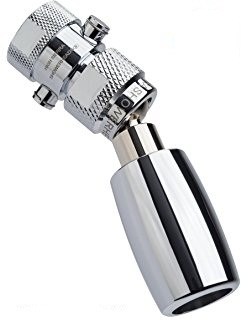
There’s an extra financial incentive to invest in low-flow fixtures, too! Many utility companies and local jurisdictions offer rebates and tax incentives to do so.
Switch to LED lightbulbs
Bathroom lights spend a surprising amount of time on, especially in larger households. You probably have more than one light fixture in the bathroom, too. Using LED bulbs instead of incandescents or CFL (compact fluorescents) is a simple, easy way to make a dent in your electricity bill. The Department of Energy says LEDs use up to 90% less energy and last up to 25 times longer than incandescent bulbs, and they also outlast CFLs. That means LEDs can run for years before they need to be replaced. We also appreciate that you can get much more comforting colors out of LED’s, compared to the harsh, cold CFL glow!
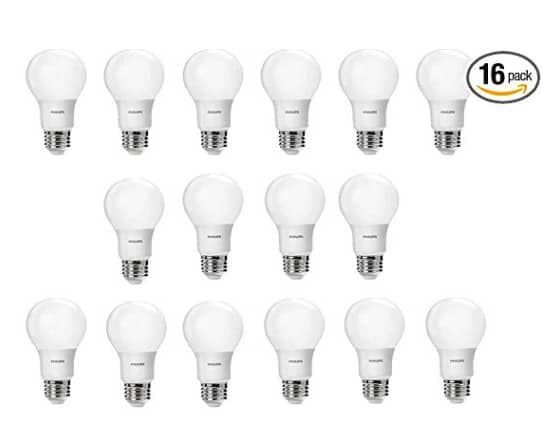
As with low-flow plumbing fixtures, you can usually find some local financial kickbacks for investing in energy-efficient lighting!
Upgrade the fan
The humble bathroom fan doesn’t get enough love. So many of us ignore it, or gripe about how it doesn’t work well without helping to fix it. And how often do you clean those vents? Probably not nearly often enough!
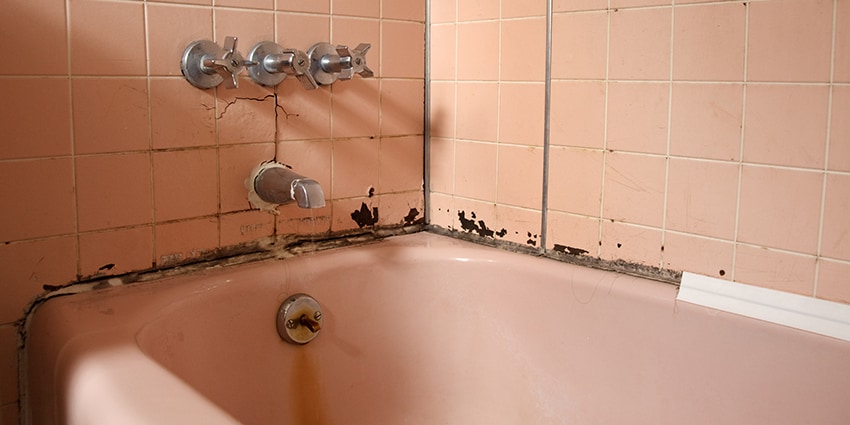
There are plenty of reasons to upgrade your bathroom fan, and they’re not all environmental. The EPA recommends running the bathroom fan or opening a window when you shower to control the moisture that feeds mold. A good fan also makes unpleasant toilet odors fade more swiftly.
On the environmental side, many of us end up running our ineffective fans for an hour or so after a shower, just to make some dent in the moisture. Older, inefficient fans can draw a lot more power than newer ENERGY STAR models, and that usage adds up!
Updating your fan to an efficient model with a more effective ventilation pathway will make a world of difference. You can cut down on the time you run the fan, and still end up with a drier, healthier bathroom!
Avoid chemical cleaners
In our guides to cleaning toilets and choosing a toilet bowl cleaner, we talk a lot about the importance of choosing safe, non-toxic cleaning products to use in your bathroom (and the rest of your home). We think it’s worth another mention here!
You can read our in-depth explanation here (homeworthylist.com/best-toilet-bowl-cleaner ). To sum up, many common bathroom cleaning solutions contain harsh chemicals that can irritate your eyes, skin and lungs, and some can cause burns. Some ingredients also raise longer-term health and environmental concerns. And never mix cleaners: bleach combined with ammonia or acids (like vinegar) releases toxic gases. Read a detailed rundown of common household cleaners and their toxic ingredients here:
https://www.organicconsumers.org/news/how-toxic-are-your-household-cleaning-supplies#close
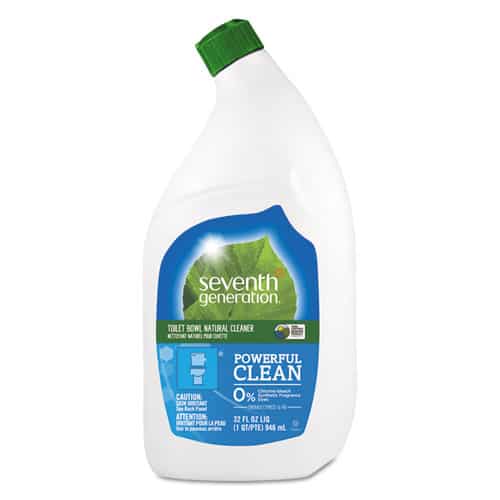
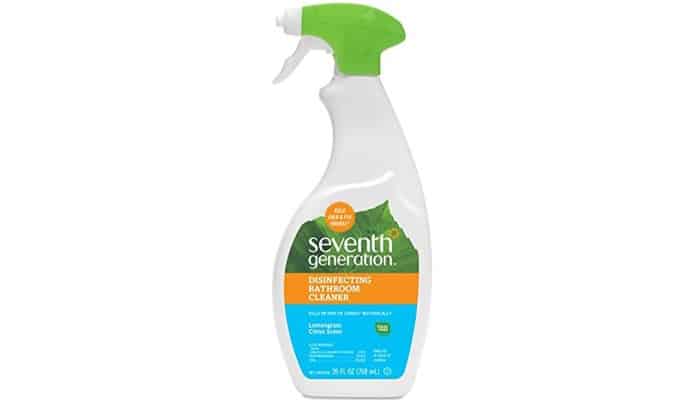
So, stick to plant-based, non-toxic, and biodegradable cleaning solutions! Seventh Generation makes our favorites. We suggest their disinfecting bathroom cleaner, and the toilet bowl cleaner. They also make a tub and tile cleaner, but the disinfecting bathroom cleaner works better and doesn’t leave streaks. Seventh Generation markets them as plant-based, without harsh chemicals. As with any cleaner, read the label and follow its directions.
Use recycled paper products
Americans use a staggering amount of toilet paper every year, even without considering the paper towels and tissues we use on top of it! Choosing paper products made from recycled fibers is one of the easiest green swaps you can make in your home, especially in the bathroom.
We recommend 100% recycled TP and paper towels. Making paper from recycled fibers means fewer trees are cut down for virgin pulp, and it generally takes less energy and water too. Imagine the impact we’d have if all of us switched year-round!
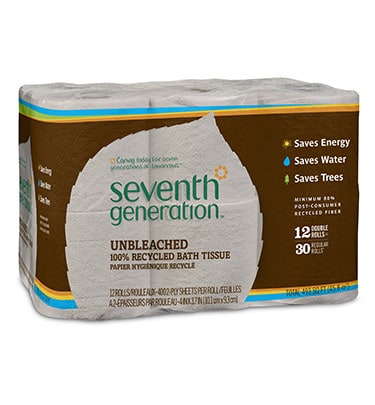
Seventh Generation makes excellent recycled paper products. We suggest their unbleached TP, because skipping the bleaching step is a greener choice.
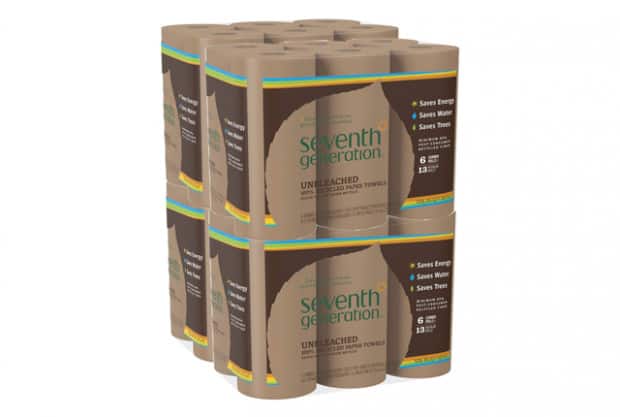
They also make similar paper towels, which are recycled and unbleached. We like them because they’re very sturdy, and they work great for cleaning toilets:
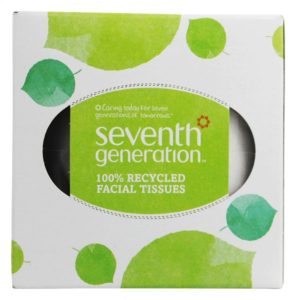
And if you’re one of the many people who keep tissues handy on the loo, check these out:
Stay away from air fresheners
Air fresheners are among the bathroom products we’d skip, as far as the environment is concerned. Aerosol sprays use propellants that add volatile organic compounds (VOCs) to your indoor air, and the fragrances in many air fresheners can contain irritants. We don’t recommend using them!
Lighting a match is an old trick for clearing odor. Or, keep a simple unscented beeswax candle handy. Just never leave a flame unattended, and keep it away from towels and curtains.
Essential oils are also good for masking odors. If you want to make a healthy alternative to air freshener sprays, simply add a few drops of your favorite essential oil (peppermint, lemon, lavender, etc.) to a mister bottle filled with water.
And always remember: covering up a scent isn’t ever going to work as well as allowing it to air out. So, just open a window, or turn on the fan in the bathroom to help disperse odors.
Adjust your cleaning routine
While you’re always going to make some impact on the environment when you clean, you can reduce it significantly by taking some smart, proactive steps!
Spray your shower down with vinegar to help prevent mildew, to start with. All you need is a mister bottle and some cheap white vinegar from the grocery store. Spray down your shower after you use it, making sure to get all the corners, nooks and crannies. Never use it in the same session as a bleach cleaner.
Vinegar is mildly acidic and helps with soap scum and hard-water film. The bigger win is drying things out: run the fan, squeegee the walls, and leave the curtain open. You should still clean the shower regularly; the EPA says to scrub mold off hard surfaces with detergent and water and dry them completely.
If you have dark slime or mold in a drain, which is fairly common, try baking soda and vinegar followed by a hot water rinse, then scrub the drain opening with a brush. If mold keeps coming back, look for a moisture or leak problem.
Don’t use harsh drain-clearing chemicals. They’re caustic, can burn skin and eyes, and can damage pipes. There are some enzyme-based maintainers you can use on a regular basis to help keep clogs at bay. They work more slowly, but they’re much gentler.
Or, you can simply take practical steps to prevent clogs from forming to begin with! Use a good mesh drain catcher to keep hair from going into your shower drain in the first place. Stay on top of clearing it, and stick to bath products which rinse off into simple suds and water rather than goopy soap scum messes.
If you know you’re using lots of TP, flush partway through to make things easier! That’s a simple way to prevent toilet clogs. If yours has chronic problems with clogging, you’re probably better off replacing it than dealing with the constant frustration.
Hot water or baking soda/vinegar applications can often clear a slow drain, too! Use hot tap water rather than boiling water if you have PVC drain pipes, and never pour boiling water into a toilet, since it can crack the porcelain. We’ve used these tricks on both sinks and shower drains with good results.
Looking for bathroom essentials to make your bathroom stylish? Check out our buying guide now.
Sources
- Residential Toilets, US EPA WaterSense
- Showerheads, US EPA WaterSense
- Consumer Guide to Energy-Efficient Lighting, US Department of Energy
- A Brief Guide to Mold, Moisture and Your Home, US EPA