Toilets Around The World: A Visual Tour of Global Sanitation Practices
Contents
 Contrary to what a lot of Americans like to think, the rest of the world doesn’t all behave like us! Especially if you don’t travel abroad frequently, you may be surprised to learn that the seated toilets we’re all familiar with aren’t actually common in many parts of the world.
So, in honor of World Toilet Day, which the United Nations observes every November 19, we wanted to take you on a tour of the world by way of toilets! There are a range of different designs and formats in use today, and we’ve got some visuals to help out.
Nonexistent/“open” toilets
According to the UN, about 3.4 billion people, roughly 4 in 10 worldwide, lack access to safe toilets. That’s a pretty sobering statistic, and the majority of us don’t realize that more than 1.5 billion people still lack even basic sanitation.
Still worse, the World Health Organization estimates that 419 million people defecate completely out in the open. They don’t even have a basic pit toilet or outhouse to use. They simply squat in a field, in a gutter, or in a river. Defecation like this contaminates water supplies like crazy, and it makes transmission of diseases and parasites rampant.
The World Health Organization estimates that inadequate sanitation causes about 564,000 diarrheal deaths each year. Poor sanitation is linked to cholera, dysentery, typhoid, polio and intestinal worms, and many other parasites and infections thrive in places where excrement is not properly dealt with.
Progress has been real but slow. In 2022, only 57% of the world’s population used safely managed sanitation services, according to the WHO. In India, the government’s Swachh Bharat (Clean India) Mission made building household toilets and ending open defecation a national priority.
Pit toilets

The next step up from defecating completely in the open is the use of pit toilets, which are common in many developing and undeveloped countries. Pit toilets consist of a dug pit, over which people squat and defecate. While they are in some ways better than defecating out in the open, there are still countless issues with this practice.
Pit toilets are often unlined, so excrement leaches out into surrounding soil and water. There’s still a lack of sanitation, and an extremely high rate of health issues from it.
Outhouses
Outhouses are usually a contained version of pit toilets, which offers some protection, especially to women. In pit and open situations, women are very vulnerable, especially in developing countries. Many are attacked en route to the toilet facilities, if they exist, or in the open when they are squatting. So, outhouses are certainly a step up from pit toilets, if still inadequate.
While we in the States think of outhouses as something to be used when camping or farming, they’re considered an upgrade for many families in rural areas around the world, where they are used instead of a flushing toilet.
Unless they are built and maintained properly, outhouses do little to reduce disease and parasite transmission compared to open/pit toilets.
Squat toilets

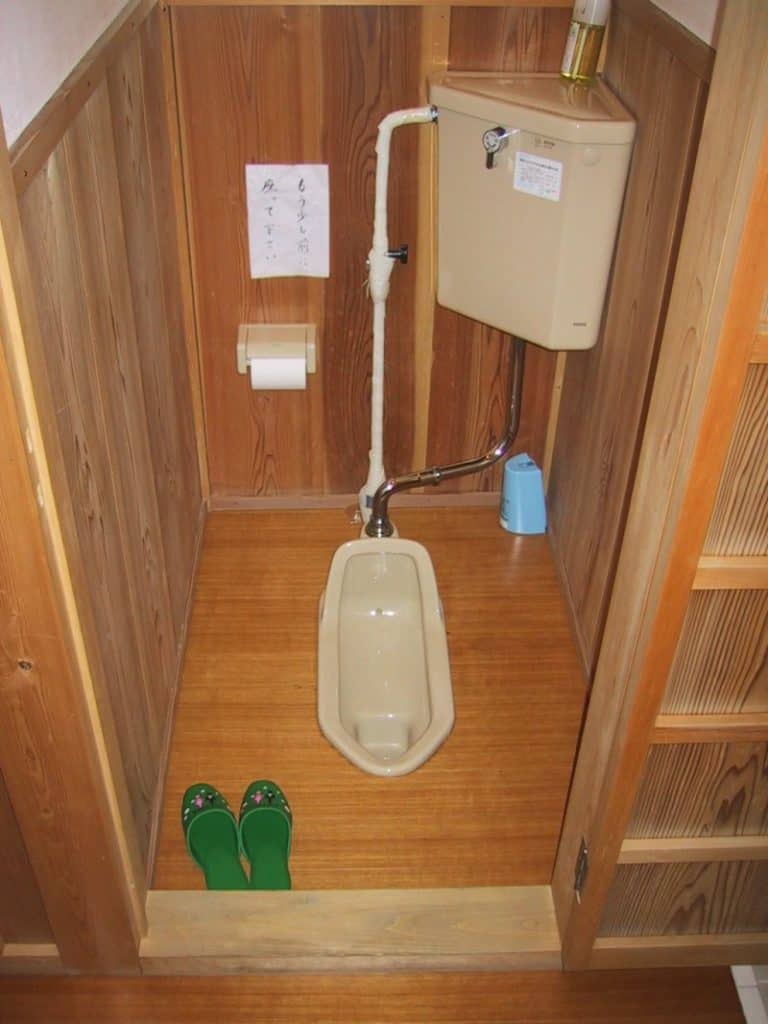
Many squat toilets are flushing toilets, so they’re a big jump from the kind of pit or collection chamber system used for pit and outhouse toilets. Squat toilets are essentially a floor-level version of what we use in the West. They’re common across most Asian countries, and the Subcontinent.
To use a squat toilet, you squat over the trough, which is indented into the floor. When you’re done, you can usually flush in the same way that you would with a seated/Western-style toilet.
Squat toilets are roughly as sanitary as seated toilets, provided that they flush properly and are cleaned thoroughly. The real difference is in comfort: most Westerners, and increasing numbers of Asians, would rather sit while using the facilities. Still, they remain common in public facilities in many parts of Asia.
Fun fact: in some places, such as older public restrooms in parts of China, toilet stalls don’t actually have front doors! So, you have some privacy from your neighbors, but not from anyone entering the restroom.
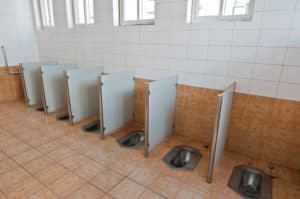
Don’t count on finding toilet paper in every stall, either! In many countries, especially in Asia, people carry their own tissues to use in public facilities.
Seated, western-style toilets
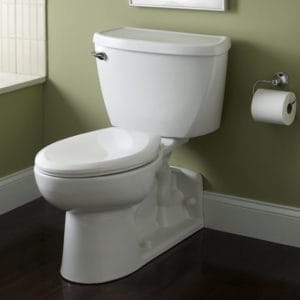
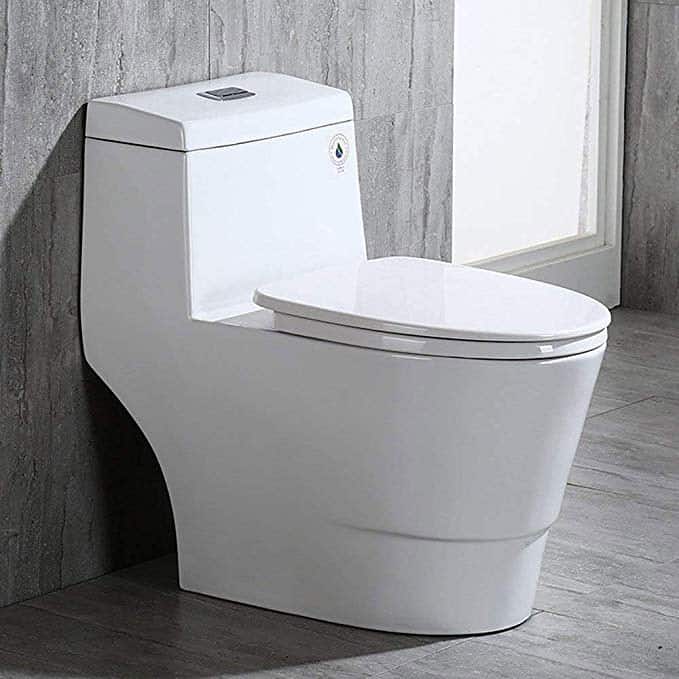
The seated, raised toilets we’re used to in America are the most common across the developed world, particularly in the West. Flush toilets became common in American homes in the late 1800s and early 1900s, and they’re usually considered to be the most sanitary format. Having waste contained in a water-filled bowl reduces odor and airborne bacteria, and the seat makes these thrones quite comfortable.
Travel tip: they’re not always free! We’re pretty spoiled in the US, having free public toilets practically everywhere. In parts of Europe, many public toilets charge a small fee, and some have attendants. Rules change, though: Britain’s Network Rail made toilets free at all of its managed stations by April 2019, including London Victoria.
You’d also be surprised to find that many Western-style toilets don’t have their own flushing mechanisms built in. Mainly in developing countries, you’ll use a bucket of water to “flush” them after each use.
Toilet/bidet combos
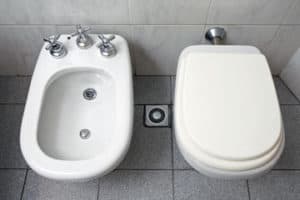
Bidets are a sort of bath/sink for washing one’s undercarriage, so to speak. They’re popular in parts of Europe and in Japan. Bidets eliminate the need to use toilet paper, and are considered by many to be more sanitary than wiping. However, they’re still fairly rare in the States.
In Europe, bidets are usually separate from toilets. In Japan, they’re integrated into the toilet itself! There’s a nozzle under the seat, which hoses down your nether regions after you’ve done your business. Bidet seats are slowly making waves here, since they’re an easy way to upgrade an American toilet to the Japanese system.
Smart toilets
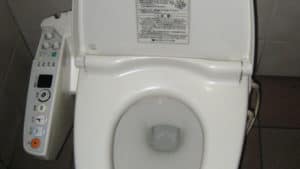
Finally, smart toilets are all the rage in Japan and the surrounding countries. These are essentially more elaborate versions of the bidet/toilet combos popularized by TOTO, whose Washlet line launched in 1980. Electronic bidet seats are now found in most Japanese homes. Smart toilets, often called washlets after TOTO’s brand name, usually have a heated seat, bidet nozzle, air dryer, and lots of adjustable or automatic features.
Travel tip: bring sanitizer abroad! In many countries, public restrooms don’t have sinks for washing up after using the toilet.
For more toilet know-how and up-to-date reviews of current models, head to this page!
Sources
- Sanitation fact sheet, World Health Organization
- World Toilet Day, United Nations
- Peeing for free is no April Fool's joke for millions of passengers, Network Rail