Japanese Toilets: what’s all the fuss about?
 If you watch or read the news regularly, you’re almost guaranteed to have heard the hype about Japanese toilets. And anyone who has friends who’ve travelled to Asia will almost certainly have heard about the high-tech wonders in restrooms abroad. They’re always a source of endless anecdotes for returning tourists and travelers!
We thought we’d give you a little primer on how Japanese toilets differ from those in the West (especially America), and why they’re catching on around the world. As you see more and more models available here, it’s worth explaining why some Japanese people will happily spend a lot more on a toilet than most of us in the States would.
Historically, there have been two types of toilet used in Japan.
The first, and the older, is the common Asian squat-style toilet. Rather than a raised seat and bowl like we use in the West, toilets in many Asian countries are sunk troughs cut into the floor. To use them, you either urinate standing (for men) or squat to defecate (or, if you’re a woman, urinate). These are still common in many public restrooms across Japan and other Asian countries. They’re popular because they’re incredibly simple to produce and install, and they use relatively little water. However, they aren’t exactly pleasant to use.
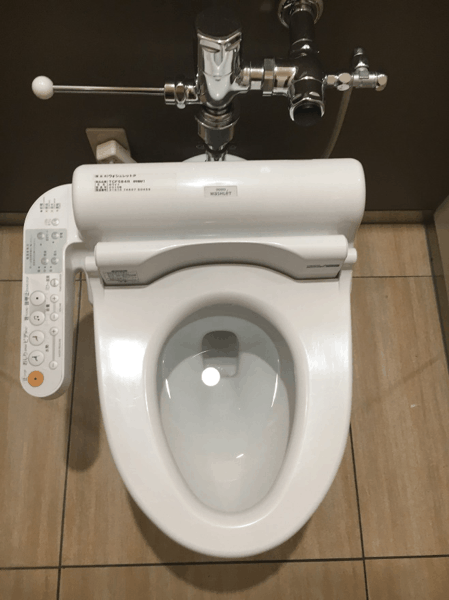
More common these days is what the Japanese refer to as the “Western-style” or raised toilet design. In June 1980, the Toto company launched its “Washlet,” an electronic seat that added a warm-water wash, warm-air drying, and a heated seat to a regular toilet. Heated bidet seats have caught on like crazy across the country: TOTO, citing a Japanese government survey, reports that 80.3% of regular households had one in 2021.
What makes them so distinctive? The Washlet design has an integrated bidet function for washing your nether regions. While those were common as separate fixtures in Europe, the Washlet made a bidet wash built into the toilet seat a mainstream household product. So, after you use one of these loos, a nozzle under the seat sprays your bits clean, using a jet of warm water (though these days you can pick a pressure, temperature, and even angle). Less toilet paper, less mess, no fuss! And on many models the nozzle rinses itself before and after each spray. Many users find it gets them cleaner than toilet paper alone. Plus, it’s a luxurious experience that once you try you never want to give up.
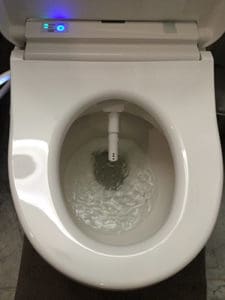
The integrated bidet was just the first feature to be introduced, though. Since the first Washlet, Toto’s toilets have added all manner of other conveniences. Successive models introduced seat heaters, “decency” noises to mask the sounds you make on the loo, and all sorts of adjustable settings for the bidet. They even incorporate blow-dry functions!
Competing brands also innovate and come up with their own range of gadget-y features, like odor reduction, automatic sensors, and more.
Toilets today are so elaborate that Japanese manufacturers had to agree on a common set of symbols, just so that people could use the bathroom without getting confused! In 2017, the Japan Sanitary Equipment Industry Association, which includes Toto, Panasonic, and Toshiba, agreed on eight standard pictograms for control panels. Before, each brand used its own labels and icons, which confused tourists from abroad.
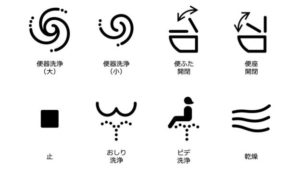
Lest you think this is some sort of unnecessary, over-engineered gimmick, we should clarify that there are some concrete benefits to the Japanese way of doing “business.”
For one thing, many people find it more hygienic. Washing with water instead of just wiping makes sense, and high-end models add features that help keep the bowl cleaner between scrubs. You wouldn’t wash your hands by just wiping them on a dry paper towel, or “shower” by just wiping a dry towel across your body. This all makes a lot of sense, when you think about it
They also turn going to the bathroom into a pleasant and relaxing experience. No huddling on cold seats, or pain from having to wipe endlessly to clean up. It’s like a short little spa visit that you’ll look forward to, rather than dread or rush through.
You’ll also use much less toilet paper. Most people still use a little to pat dry, but far less than with wiping alone, which is easier on the environment and your wallet.
Check out this guide: How To Use Japanese Toilets
The Washlet design is great for the elderly and handicapped, too. The bidet function means they don’t need to be able to reach around and clean themselves, and having so many automatic features can make the whole experience more accessible. (There’s no such thing as an “ADA-certified” toilet, by the way: the ADA sets requirements for accessible restrooms, such as a seat height of 17 to 19 inches.)
Today, if you visit Japan, you’re likely to see a toilet “greet” you automatically by raising its lid and turning on the control panel. You’ll see a full control panel with as many as a dozen buttons, and often you’ll hear a gentle rushing water sound or music when you sit. That’s the sound of the Otohime, Toto’s privacy sound feature, whose name translates into English as “The Sound Princess”. It offers a range of coverup noises for your dignity. The bowl automatically flushes, and the lid automatically closes. It doesn’t get better than that!
What to read next?: Japanese Toilets 101
Check out all the latest Japanese toilet tech in this fun video from NPR:
For more product recommendations, you can visit this link.