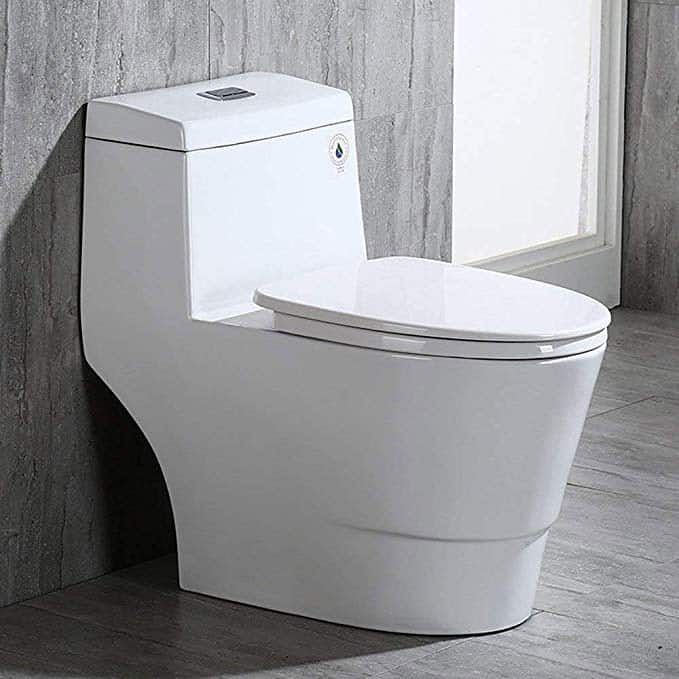
How To Install A One-Piece Toilet: Our Quick & Easy Guide For DIYers
Contents
A one-piece toilet has the tank and bowl molded together, so you set it in one go instead of bolting a tank onto a bowl. That makes installation a little simpler, but the unit is heavy and awkward. Have a helper ready to lift it.
Before You Buy: Measure the Rough-In
Measure from the finished wall behind the toilet to the center of the toilet flange (or the closet bolts on your old toilet). This is the rough-in. Family Handyman says to take this measurement before buying a new toilet, and the new toilet’s listed rough-in must match it. Most homes use a 12-inch rough-in.
While you shop, look for the WaterSense label. Those toilets use 1.28 gallons per flush or less, 20 percent less than the 1.6-gallon federal standard.
Remove the Old Toilet
- Turn the shutoff valve behind the toilet clockwise to close it.
- Flush to empty the tank, then soak up the leftover water in the tank and bowl with a sponge or rags.
- Disconnect the supply line, keeping a bucket handy for drips.
- Cut any caulk around the base, pop off the bolt caps, and remove the nuts.
- Rock the toilet gently to break the wax seal, then lift it off the flange.
- Scrape the old wax off the flange and stuff a rag in the drain opening to block sewer gas. Remove the rag before you set the new toilet.
Install the One-Piece Toilet
- Put new closet bolts in the flange slots.
- Press a new wax ring onto the flange or onto the toilet’s outlet. Wax rings can’t be reused.
- With your helper, lower the toilet straight down so the bolts come up through the holes. Press down firmly to compress the wax.
- Add the washers and nuts and tighten them a little at a time, alternating sides. Don’t overtighten, because that can crack the porcelain.
- If the toilet rocks, slip plastic shims under the base before final tightening. Cut off extra bolt length and snap on the caps.
- Reconnect the supply line, open the valve slowly, and let the tank fill.
- Flush several times and check the base and supply connection for leaks. Then caulk around the base if you like.
If the flange is cracked, loose, or sits well below the finished floor, fix that first or call a plumber. A bad flange will cause the new seal to fail.
Sources
- How To Replace a Toilet, Family Handyman
- Residential Toilets, US EPA WaterSense