How Much Does A Toilet Weigh? Find Out In Our Quick & Dirty Guide
Contents
How Much Does A Toilet Weigh? Find Out In Our Quick & Dirty Guide
Why is it important to know how much a toilet weighs? If you know how much a toilet weighs, you can make more informed decisions on how you can renovate your bathroom. For instance, you can decide if it is better to leave replacing toilets in the hands of professionals or if you can do it yourself. If it is too heavy and you are working on replacing the toilet all by yourself, carrying it can be difficult.
Most standard residential toilets weigh somewhere around 60 to 120 pounds, but there are some factors that can increase or decrease that weight. Always check the manufacturer’s spec sheet for the exact model. So how much does a toilet weigh exactly? Let us find out from these factors:
Type of Toilet
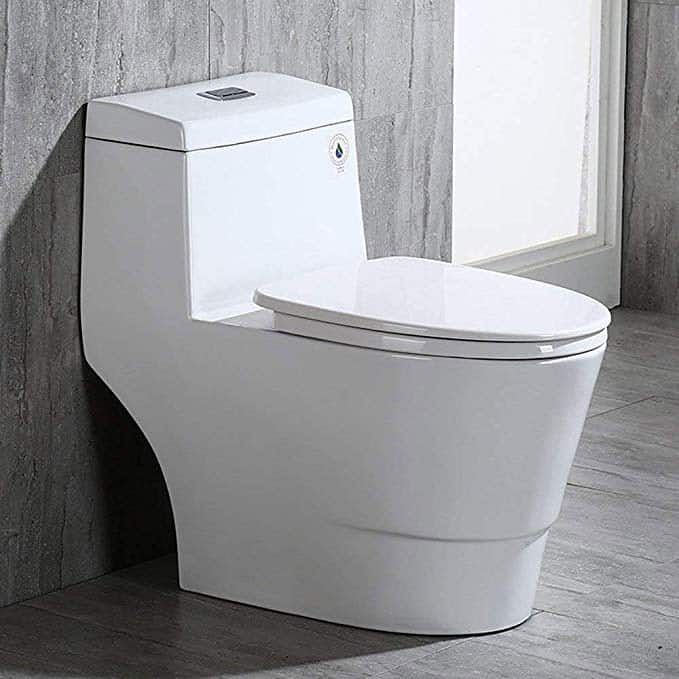
There are two basic types of toilets: the one piece toilet and the 2 piece toilet. One-piece toilets often weigh more as a single unit, and you have to move all of that weight at once. With a two-piece toilet, the total weight can be similar, but it’s split between the bowl and the tank. The reason why one-piece toilets feel heavier is because they can’t be separated. It has a one-piece molding, which means the tank is always with it during the moving process, unlike in the case of two-piece toilets where you can separate the tank from the rest of the toilet to make them easier to move in.
Additionally, many toilets now come in comfort heights. Standard toilets usually have a seat height of around 15 inches, while comfort height toilets are about 17 to 19 inches to the top of the seat, the same range the ADA standards require for accessible toilets. The extra china can add some weight.
Brand
The design choices of each brand also affect how heavy these toilets are. Even two models of the same type can differ by 30 pounds or more. Some of the models people often compare, like American Standard’s Boulevard FloWise, Kohler’s San Souci and TOTO’s UltraMax II, are older lines that may be discontinued or hard to find now, so check current spec sheets rather than relying on old figures.
In some cases, two piece toilets are heavier than their one piece counterparts depending on the manufacturer. So don’t assume a two-piece model is the lighter choice; compare the listed weights.
Materials Used
Typically, toilets are made from vitreous china, a dense ceramic made from a blend of clays (such as china clay and ball clay) with silica and other minerals. Most household toilets use this type of material as it is durable, and the glaze fuses to it during firing into a hard, non-porous surface.
However, there are also differences when it comes to the toilet seat used. Toilet seats made from plastic material are usually lighter for obvious reasons. Common seat plastics, like polypropylene and thermoset plastic, are lighter than the alternatives such as wood. Some seats are made from molded wood or solid hardwoods like birch or maple, which can add to the overall weight.
When choosing a toilet, also choose the right toilet seat material. It might be lightweight but if it is too flimsy, it will not provide the support that an average person needs. A flimsy plastic toilet seat might get damaged under heavier loads. This is why you should still consider getting a thicker plastic material, even though it might be heavier.
Wood, on the other hand, is durable but can be prone to water damage. This type of material is weakest against water, which can cause swelling and warping. If you buy a wood toilet seat, make sure it has a sealed, durable finish in order to prevent damage from setting in.
Size and Design of the Toilet
Of course, the size of the toilet also plays a big role on how much it weighs. Smaller and more compact toilets designed to fit in smaller bathrooms may be lighter compared to their traditional-sized counterparts. Comfort height toilets are heavier because of the added materials used to achieve the height. Minimalist toilets, or those that tend to have a smaller tank, are also generally lighter. Some designer toilets even forgo the base or the tank. They can be hung on a wall.
Wall hung toilet bowls are lighter because the tank sits in the wall on a separate carrier. For example, TOTO lists a shipping weight of 66.5 pounds for its Aquia wall-hung bowl, and that includes packaging. The in-wall tank and carrier add their own weight.
Camping toilets are obviously lighter because these toilets are typically made from plastic materials. Some are significantly heavier than others, especially those that mimic the design of a real toilet. But the bucket style toilets are light enough to be transported anywhere and carried even by just one person.
Technology
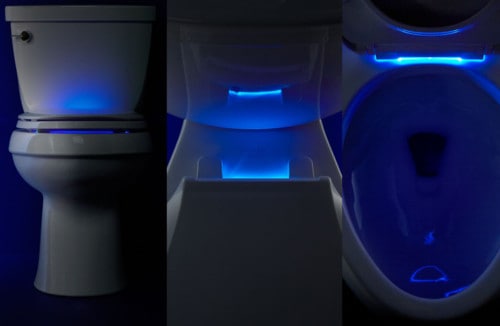
Does the toilet come with additional technologies? Motion sensors, heaters, air dryers, integrated bidet, built-in deodorizers and even lighting are integrated in some of the toilet fixtures today. There are even built-in speakers found in modern day toilets. Obviously, the more modern features are integrated, the heavier your toilet will get. If you want these parts but hate the weight, you can choose to add them later, for example with a bidet seat, rather than opt for the built-in ones. Electric features need a nearby GFCI-protected outlet, so plan for an electrician if you don’t have one.
Tips in Transporting a Toilet
Before you can install your new toilet, you need to strategize on how you can transport it first. If it is heavy and you can’t lift it up by yourself, be sure to call someone to help you carry it to its designated place. Lift with your legs, not your back. Bend your knees, keep your back straight and the load close to your body, and avoid twisting while you carry it. Wear gloves, since broken china edges are sharp.
If the bathroom is located on the same floor, you can use anything with wheels to transport it. Use a cart, hand truck or even a wheelbarrow to move the heavy toilet to its designated location, and pad it with a blanket so the china doesn’t chip.
This is why it is important to choose your toilet wisely. Ask how much a toilet weighs first to determine whether you will be able to install it by yourself. For DIY enthusiasts, it is usually better to get the two-piece toilets. Because they can be separated, you can carry the tank and the bowl separately, thereby avoiding a heavier load.
Check this website for our product recommendations.