How Does A Low-Flow Toilet Work? Learn Why You’ll Love Using One
Contents
Are you thinking about replacing your old toilet with a low-flow one? Low-flow toilets are gaining in popularity because of their benefits. They come in different styles as well, which makes them such a great option for the homes of modern-day people.
It can be a great option for your home. Federal law already caps new toilets at 1.6 gallons per flush, and some states and cities require even lower-flow models. If you live in an area where low-flow toilets are required, it is time to find a good one that suits your needs.
Why Choose a Low-Flow Toilet?
There are a lot of benefits to having low-flow toilets such as the following:
- These toilets are designed to reduce water consumption in short-term or long-term. Compared with an older toilet, every flush can save several gallons of water. It doesn’t matter if you are using the pressure-assisted ones or the gravity-operated ones – they all conserve a lot of water.
- Many are surprisingly powerful. WaterSense models must pass independent testing for flushing performance, and pressure-assisted ones are known for an especially forceful flush.
- You can start saving money right away. According to the EPA, replacing old, inefficient toilets with WaterSense labeled models can save a family nearly 13,000 gallons of water and more than $170 in water costs every year. Since these toilets do not require as much water to flush down waste, they can save homeowners a lot of money on their water bills.
- It can give you a return on investment. Unlike older toilets that use several gallons per flush, these low-flow toilets can pay back your initial investment through the money you save every year. The EPA puts the savings at more than $3,400 over the toilets’ lifetime. Efficient fixtures can also be a selling point when you list your home.
Are There Disadvantages to Using Low-Flow Toilets?
There are, however, some downsides to using low-flow toilets. The following are some of the downsides worth considering when buying this toilet:
- Since these toilets use less water to flush down waste, some models (especially early 1990s designs) don’t clear waste as well as older full-volume toilets. Some people find that they need to do a second flush to completely flush down solid wastes. This defeats the purpose of using a low-flow toilet. Modern designs have improved a lot, and WaterSense models are certified for performance. Pressure-assisted models tend to handle heavy loads best.
- In some older homes, long or poorly sloped drain lines can have trouble carrying waste with less water. Most homes don’t need any changes, but if you notice repeated clogs farther down the line after switching, have a plumber check the drain. That can mean extra expense.
- Pressure-assisted low-flow toilets may also be noisy. When you flush them down, they might produce a loud whooshing sound that can be disrupting. Although in most cases, the noise also abruptly stops, so that shouldn’t be a deal breaker.
How Much Water Can You Save From Using Low-Flow Toilets?
As you know, toilets are the biggest users of water inside the home. The EPA or the Environmental Protection Agency states that toilets account for nearly 30 percent of an average home’s indoor water use. Older toilets can use as much as 6 gallons of water for every flush. Compare that to the 1.28 gallons per flush of a WaterSense toilet, and the EPA says replacing old toilets can cut toilet water use by 20 to 60 percent.
Standard toilets sold in the US can use up to 1.6 gpf, the federal limit. There are also low-flow toilets today that come with dual flush functions. You can use the reduced flush for liquid wastes and the full flush for solid wastes.
Choosing the Right Low-Flow Toilet for Your Bathroom
Once you have decided to get low-flow toilets for your bathroom, make sure you are getting the right one for your bathroom. Here are a few factors to consider:
Design
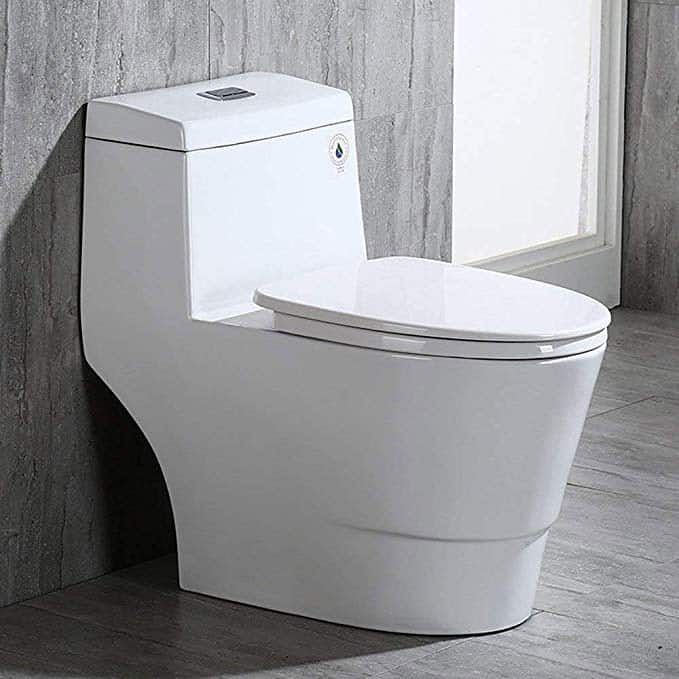
Low-flow toilets can come in different designs. You can choose from one-piece or two-piece toilets. Two-piece toilets are easier to install if you are doing it alone since you can carry the tank and the base separately. One-piece toilets are usually heavier to move in one go. They are also easier to clean because there is no seam between the tank and bowl to collect dirt over time.
Choose a design that matches the other fixtures in your home. If you have a modern bathroom, it makes sense to choose a low-flow toilet design that is more streamlined.
Height
The height of the toilet can determine how much comfort you will get. Taller people can opt for comfort height toilets, which are taller than your standard toilets. ADA-compliant toilets have a seat height of 17 to 19 inches, measured to the top of the seat, and are a good fit for many people with disabilities or mobility limits.
Comfort
Make sure the toilet seat is also comfortable. It should be large enough to accommodate your rear. Toilet seats that are too rigid can be uncomfortable to use, especially if you like to check your phone while sitting on the toilet.
Flushing Power
Also make sure it has excellent flushing power. Pressure-assisted toilets are great for those who don’t want to deal with clogs or don’t want to do a second flush for large volumes of solid wastes.
Budget
Take your budget into consideration as well. The more money you can spare for the toilet, the more features you can get. More expensive models can have features such as special glazes that help keep the bowl cleaner and make maintenance of the toilet easier.
Also make sure you are getting a good quality toilet by not compromising the materials. It shouldn’t be cheap and made from low-quality materials as that will break easily.
Conclusion
Make sure you educate yourself even further about the various low-flow toilet options out there. Click here to read buying tips and reviews that can help you make a better buying decision.
Sources
- Residential Toilets, US EPA WaterSense
- ADA Accessibility Standards, 604 Water Closets and Toilet Compartments, U.S. Access Board