Benjamin Moore Wrought Iron: The 80/20 Guide
Contents
- The Undertone Advantage: Why This Isn’t Just “Dark Gray”
- The Mood Shift: How Dark Walls Change a Room
- Universal Application: The Style-Agnostic Advantage
- The 3 Highest-Impact Applications
- 1. Bedroom Walls
- 2. Kitchen Cabinets
- 3. Bathroom Vanities
- The Comparison Matrix: Wrought Iron vs. 3 Alternatives
- The 48-Hour Decision Protocol
- The Final Analysis
- Sources
The Setup:
Benjamin Moore Wrought Iron (2124-10) is one of the most popular soft blacks for walls, cabinets and trim. Not because it’s trendy. Because it gives you a dark, dramatic look that is easier to live with than a pure black.
This is a practical breakdown of what works, what doesn’t, and how to avoid a costly repaint. You’ll get a 48-hour sampling routine that takes the guesswork out. You’ll learn how lighting changes this color. You’ll see the 3 places where it makes the biggest impact. You’ll also see how it compares with 3 other dark Benjamin Moore shades.
Let’s get started.
The Undertone Advantage: Why This Isn’t Just “Dark Gray”
Here’s what most people miss. Wrought Iron isn’t a jet black. Benjamin Moore describes it as a shade of black with a relatively soft character, and many people see hints of charcoal and navy in it.
The data point that matters: Benjamin Moore lists a Light Reflectance Value (LRV) of 8.17 for Wrought Iron. Translation? It reflects only about 8 percent of the light that hits it, so it reads as very dark. Deeper blacks have even lower LRVs and can look flat in dim rooms.
The lighting variable: Cool morning light can bring out a blue cast. Bright midday light tends to show the charcoal base. Warm evening and lamp light can make it read warmer and softer.
The exact shift depends on your windows, bulbs and surroundings. That is why sampling in your own room matters so much.
Another favorite in the dark gray family is Sherwin-Williams Peppercorn SW 7674, which offers a softer alternative with similar versatility.
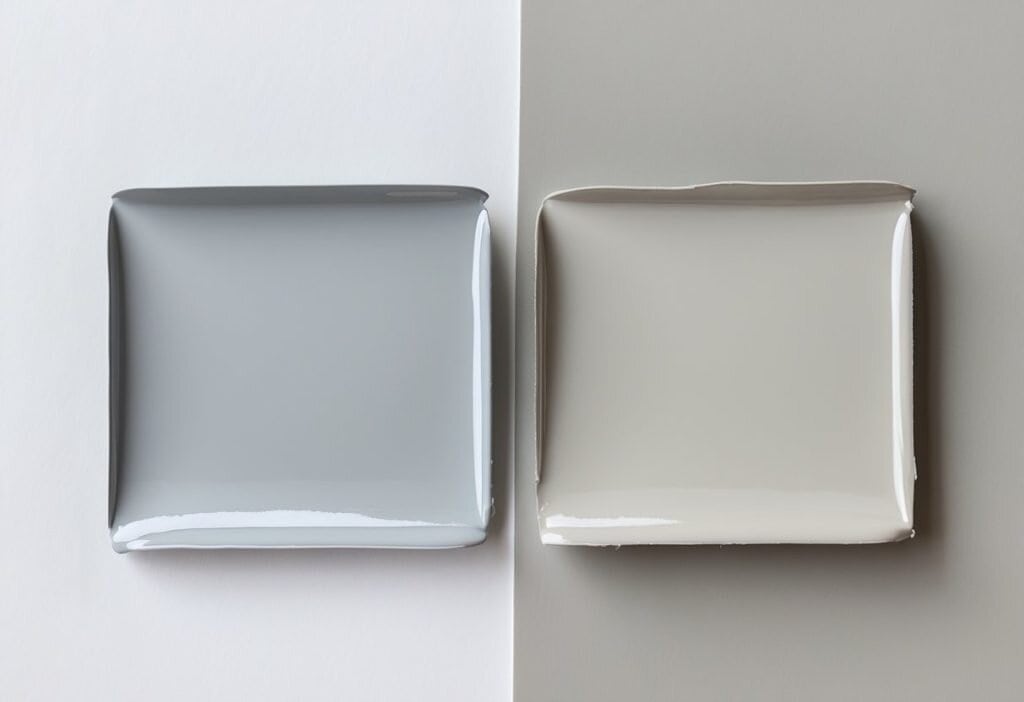
A simple testing method: Paint a 2’x3′ board, not the wall. You need mobility. Move it to 4 different spots in the room. Photograph it in the morning, at midday, in late afternoon and at night. Compare it against your furniture and fixed elements.
It takes a couple of hours and a sample pot. That is far cheaper than repainting a whole room you end up disliking.
The Mood Shift: How Dark Walls Change a Room
Question: Can paint color actually change how a room feels?
Answer: It can change the mood, though how you react is personal. Here are three common ways people use Wrought Iron.
Idea #1: The Reading Nook
Wrought Iron on three walls with a warm brass lamp creates a cozy, enclosed corner. The dark background lets books, art and lighting stand out.
Idea #2: The Powder Room
Dark colors in small spaces can feel intimate rather than cramped. A small powder room is also a low-risk place to try a bold color, since it needs little paint and time.
Idea #3: The Home Office
Some people like a dark office because the walls seem to recede and fewer details compete for attention. Others find it too dim for daytime work.
Plan for good task lighting if you go dark in a workspace. Try a sample board first to see how it feels.
Universal Application: The Style-Agnostic Advantage
Here’s a useful framework: the 4-Style Test. Modern minimalist apartment? Check. Farmhouse kitchen? Check. Traditional dining room? Check. Industrial loft? Check.
Result: Wrought Iron works in all four. Why does this matter? A versatile color is less likely to need repainting when your style changes.
Material compatibility: Warm wood tones work. Cool stone surfaces work. Shiny metals work, especially brass. Both white and cream fabrics work. The subtle navy and charcoal undertones create bridges to almost everything.
Use it as background or as the star. This flexibility makes it easier to change furniture or décor without repainting.
For example, pairing Wrought Iron with a gentle blue like Sherwin-Williams Upward can create a striking yet balanced look.
The 3 Highest-Impact Applications
Wrought Iron works in almost any room. These three locations deliver a big visual change for a modest amount of work. Here’s where to start.
1. Bedroom Walls
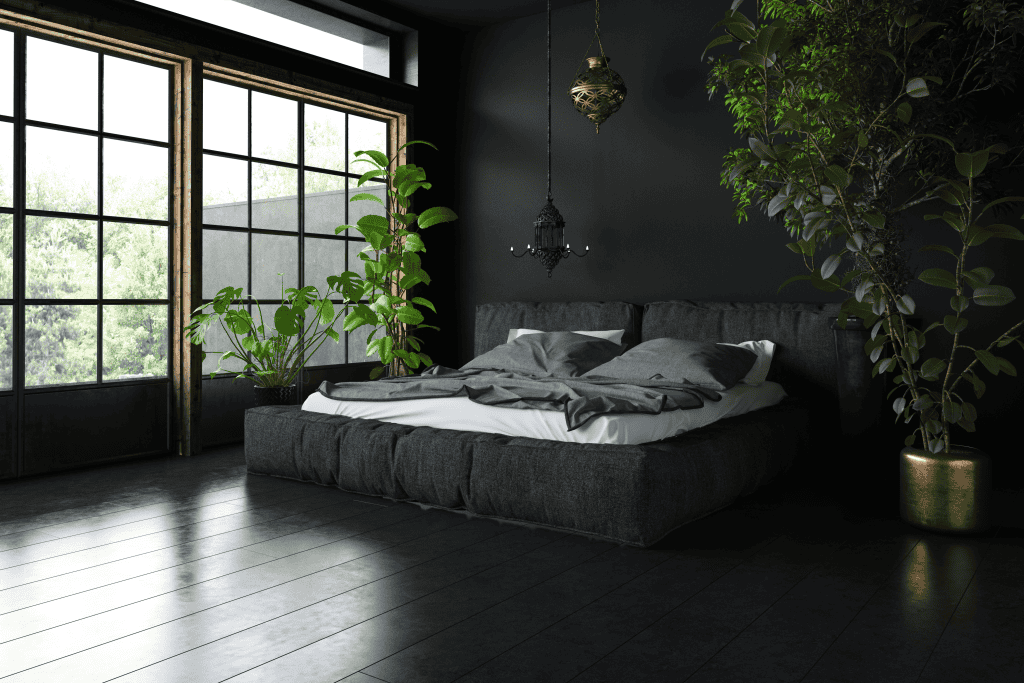
Bedroom walls in Wrought Iron create a cozy, cocooning space at night. Many people find dark walls calming because they cut down on visual noise.
In the morning, the slight blue hints come alive with natural light. Worried about going too dark? Try just the wall behind your headboard first. Test before you commit to all four walls.
An accent wall is usually a weekend-afternoon project. Dark colors often need two coats, and a tinted primer can help with coverage.
2. Kitchen Cabinets
Kitchen cabinets occupy significant visual real estate. A popular approach is Wrought Iron on the lower cabinets with white uppers. The kitchen can feel brand new without a renovation.
The dark base grounds the room while making the space feel taller. Your countertops will stand out more against the darker background. This works with both marble and butcher block tops.
Plan for real prep time: cleaning, light sanding, priming and two coats. Painting costs far less than new cabinets.
Safety note: If your home was built before 1978, the existing finish may contain lead. The EPA warns that sanding or scraping painted surfaces can create hazardous lead dust. Test first, and hire a lead-safe certified contractor if lead is present.
3. Bathroom Vanities
A plain bathroom vanity is an easy upgrade. Wrought Iron can turn a basic vanity into something that looks custom.
You don’t need to buy new when paint can transform what you have. The color pairs well with most bathroom fixtures. Chrome, brass, or black all work. No need to replace hardware.
A vanity takes far less paint than a room. Use a durable cabinet-grade finish, since bathroom vanities face moisture and frequent cleaning, and run the exhaust fan while painting.
The Comparison Matrix: Wrought Iron vs. 3 Alternatives
Here’s how Wrought Iron compares to other popular dark Benjamin Moore shades. Undertones are subjective, so always test samples in your own light.
Wrought Iron: Often described with navy and charcoal hints. All-purpose dark that works in most rooms. Choose this when you want a softer black with blue hints. One of the most versatile options.
Kendall Charcoal: Warm green-gray undertones. Best for cozy spaces like bedrooms and studies. Choose this when you want something less blue and slightly lighter. Can lean too green for some spaces.
Cheating Heart: True charcoal with brown hints. Best for traditional spaces and wood-heavy rooms. Choose this when you want something warm without blue tones. Works well with oak and walnut.
Black Beauty: True black with minimal undertones. Best for modern, high-contrast spaces. Choose this when you want a true black with no color hints. Less forgiving than Wrought Iron.
If you want a true black, go with Black Beauty. But if you want subtle drama that shifts with the light, Wrought Iron wins. I find Wrought Iron more flexible than Kendall Charcoal because it works with both cool and warm schemes.
When testing these colors, paint large swatches on different walls. The undertones appear differently depending on the lighting and other colors in the room. Don’t trust paint chips alone.
The 48-Hour Decision Protocol
Here’s a simple process for avoiding buyer’s remorse. Skipping it is how people end up repainting.
Hour 0-1: Buy sample pots of Wrought Iron and two competitors. Paint three 2’x3′ boards, one for each color. Use two coats for accuracy.
Hour 2-24: Place boards in target room. Move them to different walls throughout the day. Photograph every 4 hours in the same spot. Natural light reveals everything paint chips hide.
Hour 24-36: Live with the boards. Eat meals near them. Work near them. Sleep near them if it’s a bedroom test. Your gut will tell you which one feels right.
Hour 36-48: Make final checks against furniture, artwork, and fixed elements. Does the color enhance or fight your existing pieces? Harmony beats contrast for longevity.
By hour 48, you’ll have a much clearer answer. Less guessing, and a decision based on how the color looks in your own space.
The Final Analysis
Wrought Iron gives you that dark, moody look without the harshness of pure black. That is the main reason it stays so popular.
It’s a friend to many styles, from modern apartments to cozy family homes. It changes throughout the day, showing different sides as light shifts.
Remember to grab a sample pot first. Paint a board or a small section of your wall and watch it for a few days. Two hours of testing beats two weeks of regret.
What makes Wrought Iron special is its balance. Dark but not too dark. Bold but not loud. Modern but also timeless. Whether you use it on an accent wall or go all-in on a full room, it brings quiet confidence.
The highest-impact spots: bedroom walls, kitchen cabinets, bathroom vanities. Start with one. See how you like it. Then expand if it works for you.
Sources
- Wrought Iron 2124-10, Benjamin Moore
- Reduce the Risk of Lead Exposure at Home, US EPA